
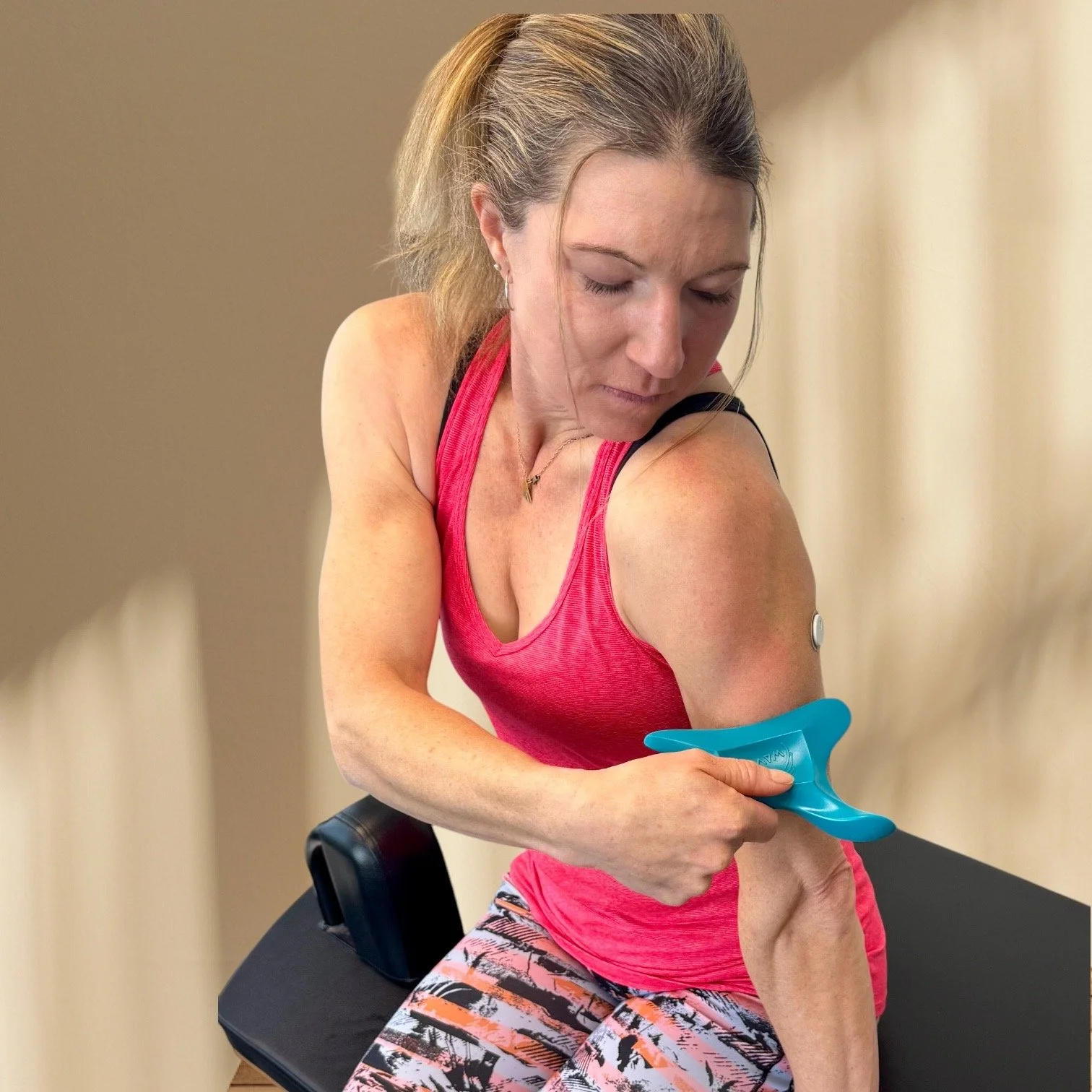
Recovery time, including manual work such as myofascial release and stretching are an integral part of an athlete’s routine. When we push our bodies we can develop tight muscles, fascial restriction and micro-tears that can lead to tendinitis, injury, and pain.
Without manual work, muscles have a lot of trouble relaxing into the resting state that allows your body to recover and heal. Tight muscles restrict blood flow and retain lactic acid and other metabolic waste products that are toxic to your tissues. Muscle scraping is one extremely effective way to help improve circulation while decreasing muscle tension and pain. Scraping helps to improve blood flow, reduce muscle tension, release post workout metabolic waste, and decrease neuromuscular pain, helping your body to be more receptive to stretching, additional manual work, and strengthening.
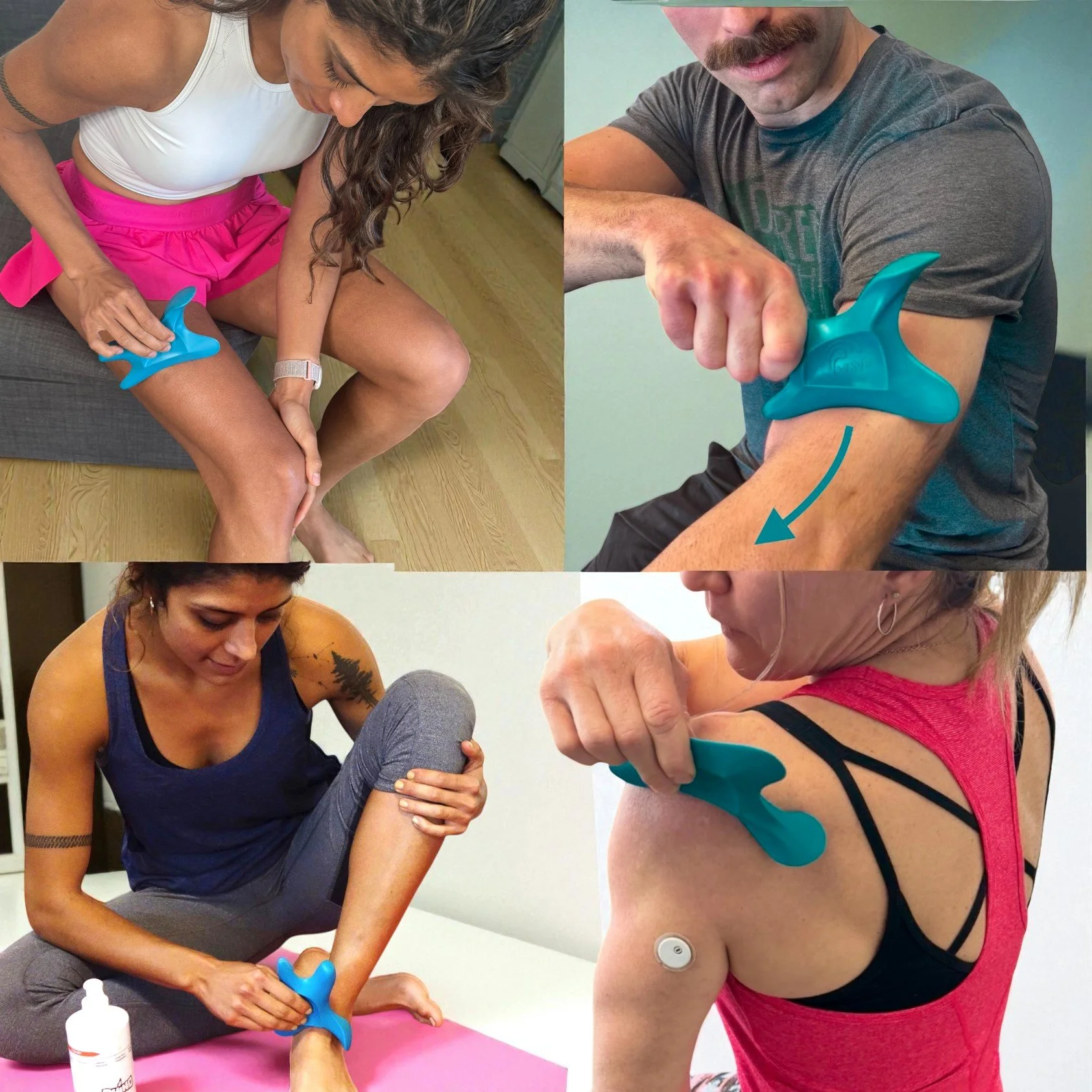
The details:
+Shortened and tight muscles can create a pull on the fascial system. This can predispose you to overuse injuries. For instance super tight calves can predispose you to achilles tendinitis and plantar fasciitis. Tight lateral quads can predispose you to patellar tracking issues. Dominant shoulder muscles and tight Pec’s and Lat’s can create imbalances leading to shoulder impingement.
+Scraping is one of the best ways to manage fascial restriction, scar tissue, adhesions, and trigger points. Studies show that scraping may increase blood flow, improve tissue mobility, interrupt pain receptors, and release myofascial restriction.
+Many athletes ask how often they should be using these types of tools. I recommend 3-4 times a week for 10 minutes a session for general maintenance and recovery. When battling chronic injuries, you will need longer and more intense treatment sessions, and therefore a frequency of 2 times a week as you need a few days of recovery between sessions. For more information check out our Videos